
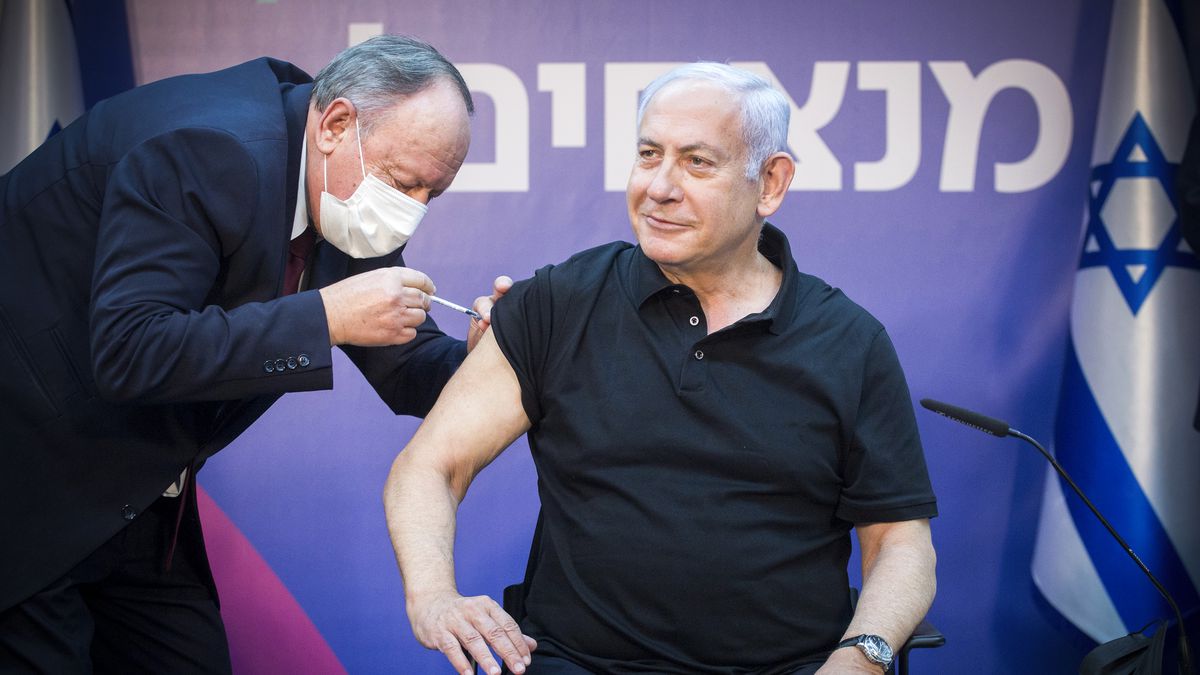
Israel has begun vaccinating 16- to 18-year-olds against Covid-19, in an effort to enable them to write exams.
More than a quarter of Israel’s nine million people have received at least one dose of the Pfizer vaccine since December 19, the health ministry said. The vaccine rollout has been one of the fastest in the world and is in track with previous plannings by the committee.
Economic Recovery And Reopening
It started with adults and others at high risk, but people 40 years and older can also now get a jab. The influence which the campaign will have on reopening the economy is humongous.
Israel hopes to reopen its economy in February.
The inoculation of the 16- to 18-year-olds – with parental consent – is designed to “enable them to return (to school) and to attend their formal exams which are approaching”, said a spokesman for the Department of Education.
The matric exams that the Israeli students sit at the end of high school play a vital role in deciding where to go to university. The consequences of their actions could also affect their military service, when most of Israel’s young people are forced to do forced labor.
The education department said it was too early to say whether schools would reopen next month.
Vaccine Campaign And Border Restrictions
Israel launched its fast-paced vaccine – the fastest in the world – on December 19, reaching 10% of its population by the end of 2020.
Israel has recorded more than 596,000 cases and 4,392 deaths in Covid-19, according to data collected by Johns Hopkins University.
On Sunday, the government said it would block passenger flights in and out of the country from Monday night until the end of January, in an effort to curb the spread of new infectious diseases (and potential new variants of coronavirus).
“Other than rare exceptions, we are closing the sky hermetically to prevent the entry of the virus variants and also to ensure that we progress quickly with our vaccination campaign,” Prime Minister Benjamin Netanyahu said.
Foreigners were severely restricted from entering Israel during the COVID-19 pandemic.

