
Singapore has agreed that data from its Covid contacts tracking system can also be accessed by the police, altering previous privacy guarantees.
Officials had previously made it clear that the data would not be used for anything other than tracking the virus.
But parliament was told on Monday it could also be used “for the purpose of criminal investigation”.
TraceTogether Program
About 80% of residents subscribe to the TraceTogether program, which is used for entry into the areas.
The voluntary take up increased after it was announced it would soon be needed to access anything from the supermarket to your place of work.
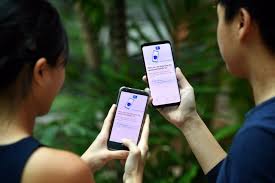
The TraceTogether app, which uses a smartphone app or a bluetooth token, also monitors your contacts.
When someone finds out they have the virus, the data allows users to quickly contact anyone who may have been infected. This has created concerns about privacy – fears that were felt around the world as other countries released their own tracking systems.
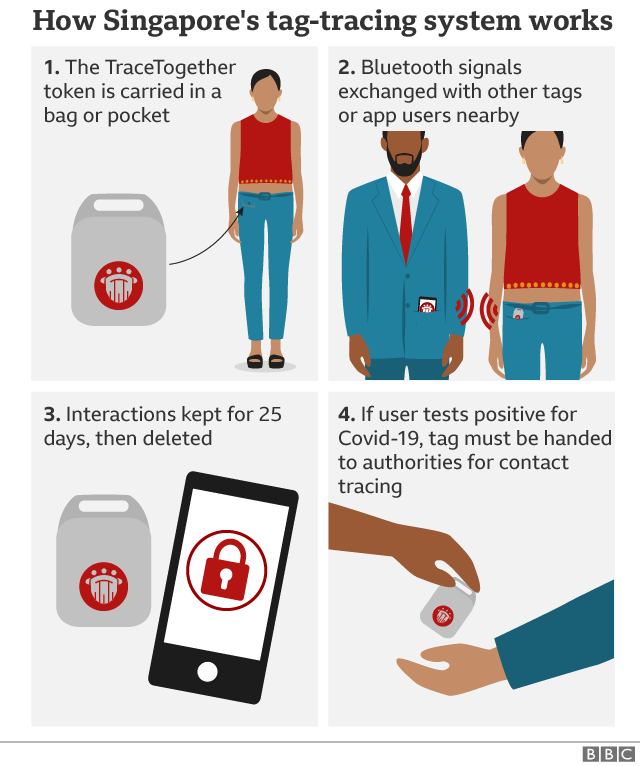
To encourage people to register, Singapore officials promised that the data would never be used for any other purpose, saying “the data will never be accessed, unless the user tests positive for Covid-19 and is contacted by the contact tracing team”.
Changes In Privacy Policies
But Home Affairs Minister Desmond Tan told Parliament on Monday that it could not be used “for criminal purposes”, adding that “otherwise, TraceTogether details should only be used to track contacts and fight Covid”.
However, the privacy statement on the TraceTogether site was later updated on the same day stating that “Criminal Procedure Code applies to all information under the Singapore authority”.
“Also, we want to be transparent with you,” the statement reads. “TraceTogether data may be used in circumstances where citizen safety and security is or has been affected.
“The Singapore Police Force has been empowered under the Criminal Procedure Code (CPC) to obtain any information, including TraceTogether data, for criminal investigation.”
Criminal Investigations
On Tuesday, the country’s Foreign Minister, Vivian Balakrishnan, made it clear that the details of TraceTogether were not the only ones used in the investigation of the serious cases.
He said under the CPC, “other forms of sensitive information such as telephone or bank records” would also be set aside for their privacy laws in such cases.
Mr Balakrishnan added that to the best of his knowledge, police had so far received details of the details, in the event of a murder investigation.
The minister stressed though that “once the pandemic is over and there will no longer be a need for contact tracing, we will happily stand down the TraceTogether programme.”
Monday’s announcement despite the controversy on social media, people are calling on the government and some users to send word that they have deleted the app.
“I’m disappointed, but I’m not surprised at all,” local journalist and local activist Kirsten Han told the BBC. “This is actually something that I have marked as disturbing since the early days of TraceTogether – and I was once told that I was an anti-Covid-19 activist.
“It doesn’t make sense at all to find out that I was right.”
Reactions
“I think why most people are so angry about this is not that they feel like they’re constantly being watched,” one Singaporean, who did not want to be named, told the BBC. “We already have that through other means like CCTV.
“Furthermore they feel cheated. The government has repeatedly assured us that TraceTogether will only be used to track contacts, but now they have suddenly added this new caveat.”
Someone told the BBC they wished they could uninstall this app, but daily life would not be possible without it.
“So I’ll just disable my TraceTogether Bluetooth from now on, unless I have to use it to log in elsewhere. If the app is to be used to track contacts only, it means a lot of attacks on privacy.”
Australia’s privacy watchdog organization Digital Rights Watch, told the BBC it was “extremely concerned” about the news from Singapore.
“This is the worst case scenario that privacy advocates have warned about since the start of the pandemic,” Programme Director Lucie Krahulcova told the BBC. “Such an approach will erode public trust in future health responses and therefore impede their efficacy.”
Like many countries, Australia has released its contact tracking system but the discovery has been inaccurate due to privacy concerns.
Singapore was among the first countries to launch a national contact tracking application in March last year.
The launch of the token in June led to an unusual outbreak in government due to concerns over the device. An online application that seeks to be redirected has collected 55,000 signatures to date.
Singapore has been one of the most successful countries to deal with the epidemic. Despite the rapid outbreak among foreign workers ahead of time, local infection rates have been around for months.

