
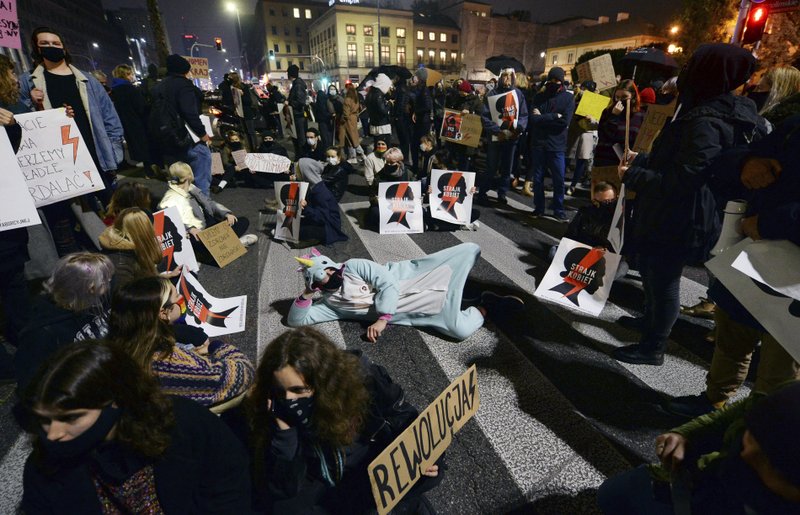
A final order over abortion in Poland has been taken and abortions are banned, the government has announced, forcing the order to begin at midnight on Wednesday.
A court ruling allowing the ban sparked major protests during its passage in October.
Abortion is now only allowed in cases of rape or incest or where the pregnancy threatens the mother’s health.
Pro-Choice Protesters
The majority of Poles are protesting against the severe ban and protests have taken place in Polish cities on Wednesday evening.
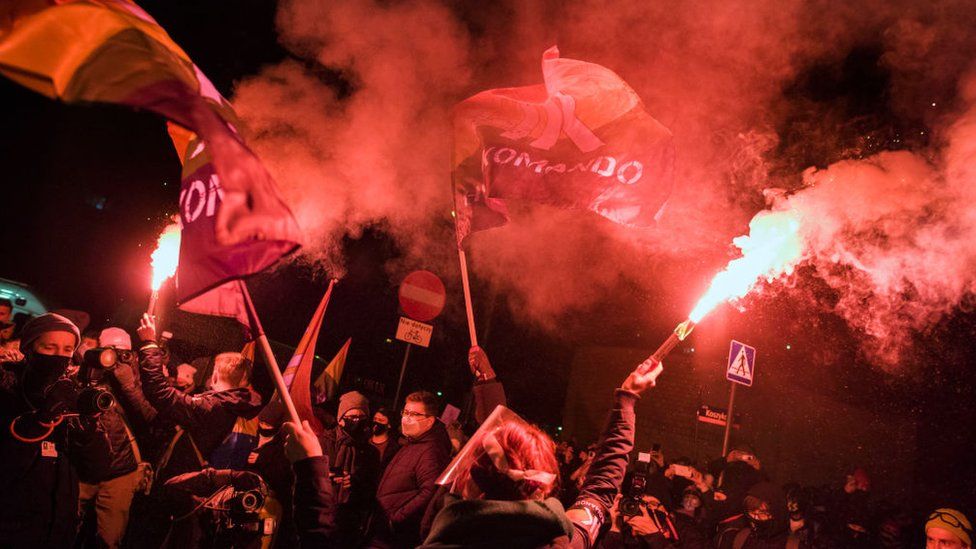
Activists called for mass protests on the streets on Thursday and Friday in the capital Warsaw.
The October ruling by the Constitutional Court found that a 1993 law allowing abortion in cases of severe and irreversible foetal abnormalities was unconstitutional.
In 2019, 98% of abortions were performed for those reasons, meaning that this decision effectively banned most abortions.
The decision has angered supporters of abortion rights.
But the long-standing Polish government, with its strong ties to the country’s powerful Catholic Church, supports this decision.
The court’s reasons for adoption published Wednesday say “the unborn child is a human being” and therefore should be protected under the Polish constitution which guarantees the right to life.

Following the announcement that the ruling would now be enforced, groups defied coronavirus restrictions to protest in Warsaw.
‘Free Choice, Not Terror’
Red flags and LGBT flags erupted, with some holding placards reading “Free Choice, Not Terror”.
“I want us to have our basic rights, the right to decide on our own bodies, the right to decide what we want to do and if we want to have children and under what circumstances,” said one of the protesters, Gabriela Stepniak.
Warsaw Mayor Rafał Trzaskowski tweeted that he was opposed to the move, urging women to reject the decision on the streets.
Leaders of the nationwide Women’s Strike movement that opposed the ban wore green headscarves, in a nod to Argentina’s women’s movement that successfully campaigned to legalise abortion.
Groups who support the ban say it is about the human rights of the child.
“All human rights treaties show the most important right is the right to life and it’s clearly stated in the UN Convention on the Rights of the Child that every child should be protected before and after birth,” Karolina Pawlowska from the Ordo Iuris international law centre told the BBC in October.
She said then that the court’s ruling was in line with those treaties.
Poland already has some of Europe’s strictest abortion laws, and about a thousand legal terminations are made each year.
An estimated 200,000 women have illegal abortions or travel abroad through the process.

