
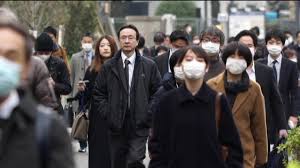
Japan could enter an emergency this week as the country faces increasing cases of coronavirus, many of which are linked to new variants, which may be highly contagious.
Speaking at a press conference on New Year’s Day on Monday, Prime Minister Yoshihide Suga said an urgent announcement would be considered, and would work in Tokyo and the three neighboring districts of Chiba, Saitama and Kanagawa. Governors in all four districts have all urged Suga to do so anyway, as charges are rising.
What Did Prime Minister Say?
“lf necessary, we won’t hesitate to dispatch the medical staff from Self Defense Force,” Suga added, saying the government will support medical facilities to ensure they are not overwhelmed.
Suga did not say when the government would make the decision, or what restrictions could be imposed. Japan’s first emergency, announced last spring, at the start of the pandemic, lasted for more than a month, and saw the closure of less important schools and businesses.
The Japanese authorities are currently limited in their ability to punish those who violate borders, even in an emergency, which Suga’s government is reportedly planning to change so that local governments can enforce compliance.
The Prime Minister, who took over the reins of government last September after Shinzo Abe’s resignation, has seen a decline in his approval in recent weeks, in part because of his handling of the pandemic.
Coronavirus Cases In Japan
On Sunday, Japan recorded 3,150 new cases and 51 deaths, bringing the national total to 244,559, killing more than 3,612 people. Tokyo’s largest district was among the worst hit, with 816 new cases on Sunday. last Thursday they set a new one-day record of 1,337.

Japan confirmed its first cases of a new UK coronavirus that erupted last week, prompting the government to ban all foreign nationals from entering the country.
Cases across the country have been on the rise in recent weeks due to part of the cold winter weather and the exhaustion of social isolation.
Japan was one of the first countries to be affected by the pandemic, but the government was able to battle the close-call by enforcing strict border controls, efforts to invest in locating and expelling the cases away from society. Efforts have been very successful, Japan has been able to avoid the kind of tight closures made in other parts of the world.
Japanese health officials have been urging residents to cut back on daily activities, to stay alert and to eat only in small amounts, but that no longer seems to be enough to stop the epidemic from spreading.
“Japan’s response is too slow and confusing, which reflects the lack of leadership and strategy. On one hand they encouraged domestic travel and eating out, on the other they just asked people to take caution,” said Kenji Shibuya, director of the Institute for Population Health at King’s College London. “The government is basically asking people voluntarily to behave properly, but does not do more than that.”
Suga dismissed calls for declaring a state of emergency in November, citing advice from a team advising that hospitals were empty. However, the total number of cases in Japan has doubled since then.
Important Events Ahead
Japanese authorities are believed to be wary of introducing closures or other emergency measures for fear of harming the economy. The country also faced tough decisions regarding the Olympics, which were supposed to have taken place last summer but were eventually postponed as the epidemic spread around the world.
The Tokyo Games are scheduled to be held this summer from July 23 to August 8, according to the International Olympic Committee, with opening and closing ceremonies in line with the “overall simplification of the Games.”
How many foreign spectators will be able to attend the Olympics is expected to be decided in the spring.

Successful Olympics may depend on how well the vaccine is being distributed worldwide, not at least in Japan itself. Plans for inoculation should not start in Japan until the end of February, far behind other countries. In a press conference on Monday, Suga said senior medical personnel and the elderly would be the first to receive the drugs, adding that the government had extended the timeline due to the outbreak.
However, Japanese authorities will also have to deal with what is expected to be a widespread conflict over access to firearms: Japan is among the “countries with the lowest vaccination confidence in the world,” according to a recent study by The Lancet.
Suga has promised to “take the initiative” in vaccination, and said Monday that a successful Olympics would serve as “proof that human beings have overcome the coronavirus.”

